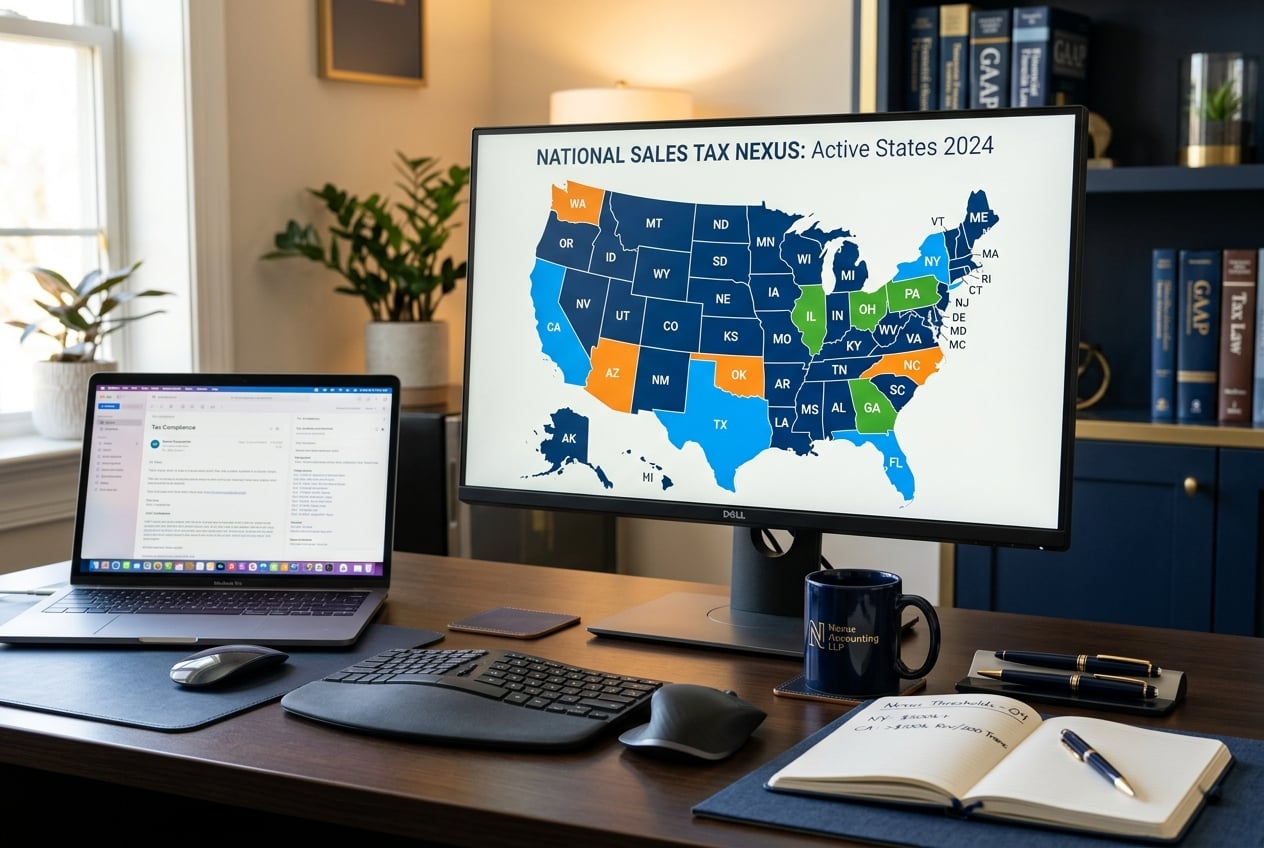
If you sell online, you almost certainly have sales tax obligations in more states than you think. Since the 2018 Wayfair decision, every state with a sales tax can require out-of-state sellers to collect it. Here’s a practical roadmap to staying compliant without losing your mind.
Step 1: Understand Nexus
“Nexus” means a sufficient connection to a state that allows it to tax you. There are two kinds:
- Physical nexus — an office, employee, warehouse, or inventory in the state. Yes, inventory in an Amazon FBA warehouse counts.
- Economic nexus — crossing a state’s sales threshold, most commonly $100,000 in annual sales into that state. Some states add transaction-count tests; a few have no threshold-safe harbors at all.
Step 2: Find Out Where You Have Nexus
Pull your sales-by-state report for the trailing 12 months and compare it against each state’s threshold. Don’t forget marketplace sales — and don’t assume your marketplace handles everything (more on that below).
Step 3: Register Before You Collect
You must hold a sales tax permit in a state before you begin collecting its tax. Collecting without a permit is illegal, and registering late can trigger back-tax assessments plus penalties. Register through each state’s department of revenue, or use a service that handles multi-state registration for you.
Step 4: Collect the Right Rate
Sales tax rates are destination-based in most states: the rate depends on where your customer is, and can include state, county, city, and special district layers. There are over 11,000 taxing jurisdictions in the US — configure your platform (Shopify, WooCommerce, Amazon) to calculate rates automatically.
Step 5: Know How Marketplaces Change the Picture
Every state now has marketplace facilitator laws: Amazon, Etsy, Walmart and similar platforms collect and remit tax on sales they facilitate for you. But you may still need to register, file returns (even zero-dollar ones), and — critically — collect tax on sales through your own website, which marketplaces don’t touch.
Common trap: a seller assumes “Amazon handles my sales tax,” forgets their Shopify store entirely, and racks up two years of uncollected tax liability in a dozen states.
Step 6: File On Time, Every Time
Each state assigns a filing frequency — monthly, quarterly, or annually — based on your volume. Due dates differ (most are the 20th of the following month, but not all). Late filings typically cost 5–25% of the tax due, plus interest. Many states offer small discounts for on-time filing; late filers pay for the punctual ones.
Step 7: Keep Audit-Ready Records
States can generally look back three to seven years. Keep exemption certificates, resale certificates, and detailed sales reports organized and retrievable. If you discover past liabilities, a voluntary disclosure agreement (VDA) can dramatically reduce penalties — but only if you come forward before the state finds you.
When to Get Help
Multi-state sales tax is genuinely complex, and the cost of getting it wrong compounds monthly. Alpha Tax Pros handles nexus analysis, registration, filing, and VDA negotiations for e-commerce sellers across all 50 states — so you can sell everywhere without worrying about everywhere.

Need Help With Sales Tax?
Book a free 30-minute consultation — a licensed CPA will review your situation and give you a flat-rate quote. No obligation.
Leave a Reply